

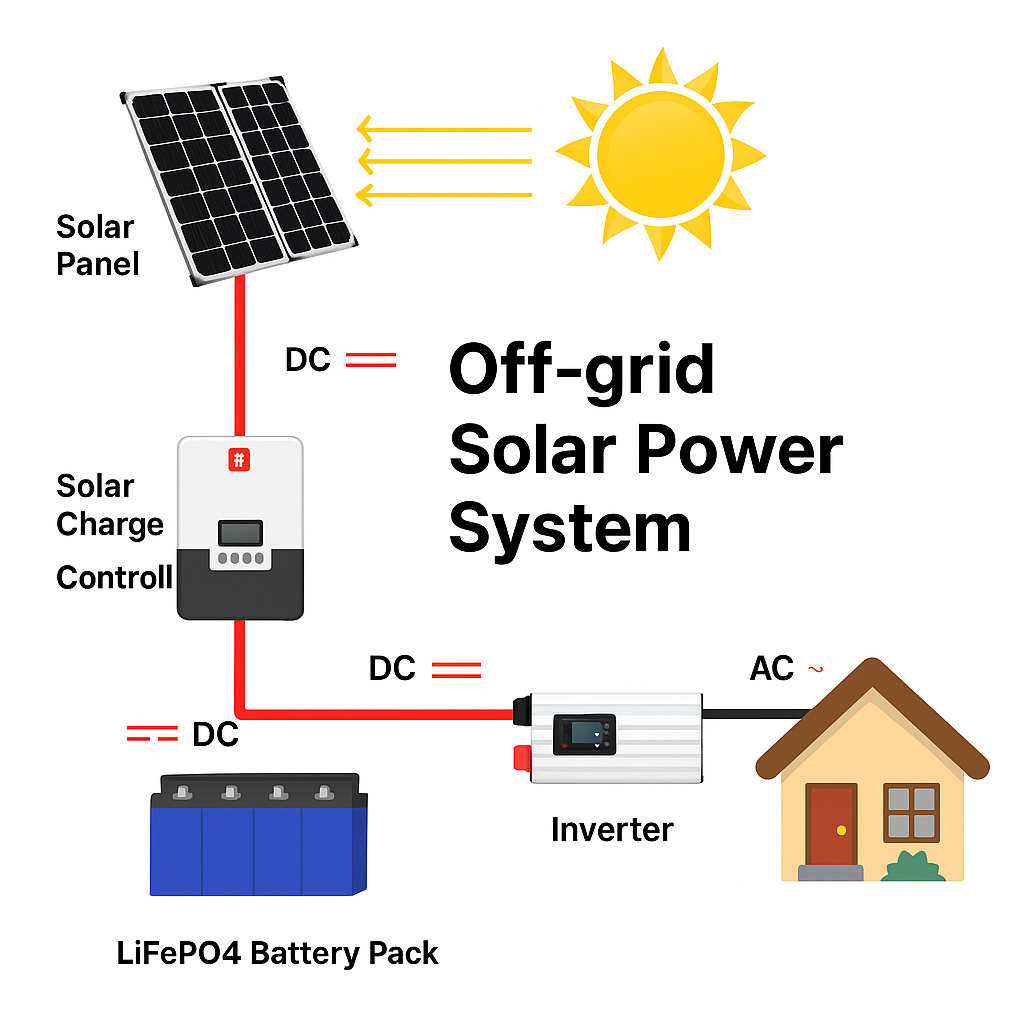
What is an Off-Grid Solar System?
An off-grid solar system is a standalone power solution that allows you to generate and store electricity without depending on the government grid. It uses solar panels, batteries, an inverter, and a charge controller to supply electricity directly to your home, business, or farm. Unlike an on-grid system, it works independently, making it ideal for remote areas or places with frequent power cuts.
🔋 Key Components of an Off-Grid Solar System
- Solar Panels – Capture sunlight and convert it into electricity.
- Solar Inverter – Converts DC power into AC power for household use.
- Battery Bank – Stores excess solar energy for night use or cloudy days.
- Charge Controller – Protects the batteries from overcharging or deep discharge.
✅ Benefits of Off-Grid Solar Systems
- Energy Independence – No reliance on the electricity grid.
- Reliable Backup Power – Works during power cuts.
- Cost-Effective in the Long Run – Saves money on high electricity bills.
- Eco-Friendly – 100% renewable and sustainable energy.
- Ideal for Remote Areas – Works in villages, farms, and off-site locations where grid power is unavailable.
⚡ Applications
- Residential homes in rural or remote locations.
- Farms and agricultural operations.
- Factories, schools, and hospitals in areas with weak grid connections.
- Vacation homes, cabins, and eco-resorts.
📌 Conclusion
Investing in an off-grid solar system is a smart move if you want reliable, independent, and eco-friendly power. It not only ensures uninterrupted electricity supply but also contributes to a sustainable future by reducing dependency on fossil fuels.